Gather as the church. Live as the church.
Suffolk Prayer School opened on Sunday, 11 October 2026, when six adults and two children gathered at St Clement’s Arts Centre, Ipswich.
Beginning a school of prayer in a place that has witnessed centuries of worship felt deeply significant. Yet our access to God does not depend on a building or a piece of ground. Under the new covenant, we come to the Father through Jesus Christ, wherever we are. Jesus taught that worship would not be tied to a particular location: the Father seeks those who worship Him in spirit and in truth (John 4:21–24).
The building’s history prompted a reflection on Isaac reopening the wells dug in Abraham’s day (Genesis 26:18). Perhaps, in our own little way, we are digging again the ancient wells—rediscovering and practising a life of prayer, with our confidence in the God who hears.
Our starting point is simple: God hears prayer. We want to know Him more deeply, understand what Scripture teaches about prayer and put what we discover into practice.
"Drawing inspiration from Paul’s daily discussions in the lecture hall of Tyrannus (Acts 19:9–10), SPS brings believers together to read, question, discuss and pray."
We come with open Bibles and teachable hearts, depending on the Holy Spirit.
Everyone comes as a learner. Everyone is encouraged to participate.
Prayer that continues beyond our gatherings—into our homes, workplaces, and neighbourhoods.
These are the truths we hold most firmly. We hold them as a foundation to build on, not a fence to keep people out. You are welcome to learn with us, ask questions and test what we teach against Scripture.
The sixty-six books of the Old and New Testaments are the Word of God, breathed out by the Holy Spirit. It is without error as originally given, and it is our final authority for faith, conduct and ministry. We place nothing alongside it as equal. It is living and active, and we never finish learning from it (2 Timothy 3:16).
There is one God, eternally Father, Son and Holy Spirit: three Persons, equally God, one in being, purpose and glory. He made all things and rules over history. We know God because He chooses to make Himself known, not because we worked Him out by reasoning alone.
Jesus is fully God and fully human. Conceived by the Holy Spirit, born of the Virgin Mary, and lived a sinless life. He died on the cross in our place, bearing our sin, rose bodily on the third day, and now reigns at the Father's right hand. His Kingdom is alive in every believer and advancing through the Spirit.
Saved by grace alone, through faith alone, in Christ alone (Ephesians 2:8–9). Meeting Christ brings repentance.
The Yoruba word is Ìrònúpìwadà and the New Testament word is metanoia: a turning of the whole person, in mind, will and affection, back to God.
The third Person of the Trinity, fully God, present and active today. He equips and empowers the Church for worship, witness and service. We believe all the gifts of the Spirit in 1 Corinthians 12–14, including tongues, prophecy, healing and miracles, are available today to build up the body.
God created men and women in His image, giving every person inherent dignity and worth. Whatever their background, history or circumstances, everyone deserves respect and love. Sin has distorted, but not erased, God’s image in us. In Christ, that image is renewed.
Through Christ and by the Spirit, every believer can come to the Father with confidence (Hebrews 4:16). Prayer is not a technique to master but a relationship to live in. We learn it the way we learn any skill, by being taught, by asking questions and by practising.
Marriage is the covenant union of one man and one woman, set up by God at creation. It reflects the bond between Christ and His Church and is the right place for sexual intimacy and raising children. We hold this conviction with compassion, never contempt.
The one holy, universal Church, the body of Christ. The Church is not a place to attend but a people to belong to—gathered for teaching and prayer and scattered through daily life. Suffolk Prayer School is one expression of that body, honoring every other expression.
Jesus is our great High Priest. Because of Him, every believer has direct access to God, with no human go-between, and shares in His royal priesthood (1 Peter 2:9). Christ gives apostles, prophets, evangelists, pastors and teachers to equip all His people for ministry (Ephesians 4:11–12). Every believer is sent to bear witness and make disciples.
Christ’s bodily resurrection is the guarantee of our resurrection (1 Corinthians 15:20). He will return personally, visibly and gloriously. Those who belong to Christ will enjoy eternal life in God’s presence. This is our living hope.
"If you have questions about any of this, we would be glad to talk. Test it against Scripture. We would want you to."

These ground rules explain how we learn together. By ticking the box at the end of this page, you agree to take part in this spirit.
The leader is not an expert who has mastered prayer. He is a learner, still growing. His job is to lead our learning, share what he has understood and stay open to learning more, including from you. Everyone is asked to come with the same openness.
“When the Spirit of truth comes, he will guide you into all the truth.” — John 16:13, CSB The Holy Spirit is our Teacher. We rely on Him to open up Scripture, correct our thinking and help us live out what we learn. That means staying humble: what we understand can always be tested and corrected.
“All Scripture is God-breathed and is valuable for teaching the truth …” — 2 Timothy 3:16, CJB Scripture is our shared authority. We read slowly, look at the context and compare translations. We keep asking, “What does the passage say, and what in it supports what we think?” Everything said here, including by the leader, is tested against Scripture.
We expect God to speak truth, and we trust His Word. Faith welcomes honest questions. We want to understand so that we can believe, obey and be changed.
We welcome the prayers, guidance and support of others, but we do not hand over responsibility for our growth. Each of us must engage, pray and respond.
Listening is active. We follow the passage, weigh what we hear, note our questions and think about how to respond. Everyone is encouraged to contribute by reading, asking, reflecting, sharing or praying. Not everyone needs to speak for the same length of time.
Each of us may have an insight, a question or an experience that helps someone else. We share it generously and humbly, without making our own experience a rule for everyone. We make room for others so that no one person takes up all the time.
It is fine to say, “I don’t understand,” “I’m not sure,” or “Could we look at that again?” We challenge ideas, never people. We let others finish, listen to understand and stay willing to change our minds. Some questions will stay unanswered for a while, and that is all right.
Sharing personal things is always voluntary. No one is pressed to share private matters or to pray aloud. What is shared here stays here unless the person gives permission to repeat it.
The only exception is when someone may be at risk of serious harm. In that case the leader may need to involve others to get help, and will tell the person first where possible.
We are a community of faith, not just a class, so pastoral care is part of how we live together. We pray for one another, notice when someone is struggling, and offer encouragement, comfort and practical help where we can. If you are going through a hard time, you are welcome to tell the leader, who will listen and pray.
We are here to grow in prayer. Each session should leave us with something to believe, rethink, obey or practise. We will pray together in our meetings and keep practising through the week.
If someone’s behaviour is getting in the way of the group, the leader will first speak to them privately and kindly. If the problem continues, the person may be asked to step back from the school. The aim is always to protect the group while treating the person with respect.
We ask for your details to send reminders, notes and updates. We will use them only for Suffolk Prayer School.
We have received your details and will be in touch shortly with upcoming session details.
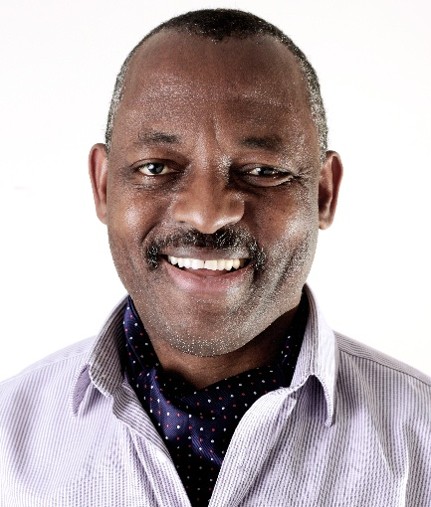
“I’m Wale, though many call me St Wale—a reminder that everyone in Christ is a saint.”
Adewale Adefuye [ah-day-wah-lay ah-day-foo-yay] leads the learning at Suffolk Prayer School as a fellow learner. A Christian since 1986, he brings decades of ministry experience alongside the practical, analytical perspective shaped by his background in civil engineering and chartered accountancy. He holds a master’s degree in Hydraulics and Hydrology.
His ministry helps people know Father God, understand their faith and live it out. He longs to see God’s life expressed through believers wherever they are: gathered together, at home, at work and in their neighbourhoods. He has ministered in London, Lagos and, most recently, Ipswich.
Wale and Sheila have been married for almost 35 years and have two adult children. He is co-author of The Paternoster Code.
The Paternoster Code is a novel about prayer, faith and reconciliation. During a 13-hour train journey across Britain, a grieving young widow and an undercover minister confront danger, vengeance and the transforming love of God.
Weaving together the persistent widow, David and Goliath, and the Lord’s Prayer, the story explores how a lifelong relationship with the Father changes lives.
Co-authored by Adewale Adefuye
Available Online